Disaster demolition is a critical service in Baltimore, MD, where unexpected events such as storms, fires, structural failures, and other emergencies can leave buildings unsafe and unstable. When damage occurs, the first priority is safely removing hazardous structures so recovery and rebuilding can begin as quickly as possible.
At Legendary Demolition Baltimore, we specialize in disaster demolition services designed to handle urgent, high-risk situations with precision, speed, and safety. Our team is trained to carefully assess damaged structures and carry out controlled demolition that protects people, nearby properties, and the surrounding environment.
Why Disaster Demolition Is Necessary in Baltimore
When a structure is damaged by fire, flooding, wind, or impact, it can become extremely dangerous. Walls may weaken, foundations can shift, and electrical or gas systems may be compromised, creating serious safety hazards.
Disaster demolition is the process of safely removing these unstable structures before they cause further harm. In a city like Baltimore, where older buildings and dense neighborhoods are common, quick and controlled demolition is essential for preventing accidents and restoring safety.
Beyond safety, disaster demolition also helps clear the way for rebuilding efforts. Once damaged structures are removed, property owners and developers can begin reconstruction without delay, helping communities recover faster.
The Importance of Professional Disaster Demolition
Disaster demolition requires much more than standard teardown work. It involves careful planning, structural evaluation, and specialized techniques to handle unpredictable conditions.
Before any demolition begins, a detailed site inspection is performed. This includes assessing structural stability, identifying hazardous materials, and evaluating risks to surrounding buildings. This step is essential for determining the safest approach.
Once the assessment is complete, a controlled demolition plan is developed. This plan ensures that the structure is removed in a way that minimizes risk, prevents unintended collapse, and protects nearby infrastructure.
Professional teams also coordinate equipment, safety barriers, and debris management systems to ensure the entire process is handled efficiently and responsibly.
Benefits of Disaster Demolition Services
One of the main benefits of disaster demolition is fast removal of unsafe structures. After a disaster, time is critical, and quickly clearing damaged buildings allows recovery work to begin sooner.
Another important benefit is safety. Unstable structures can collapse without warning, posing serious risks to workers, residents, and nearby properties. Professional demolition eliminates these hazards in a controlled environment.
Proper debris removal is also a key advantage. Materials are carefully cleared, sorted, and disposed of according to safety and environmental guidelines, ensuring the site is left clean and ready for rebuilding.
In some cases, salvageable materials can be recovered, reducing waste and supporting more sustainable reconstruction efforts.
Methods Used in Disaster Demolition
Disaster demolition requires different techniques depending on the level of damage and structural stability.
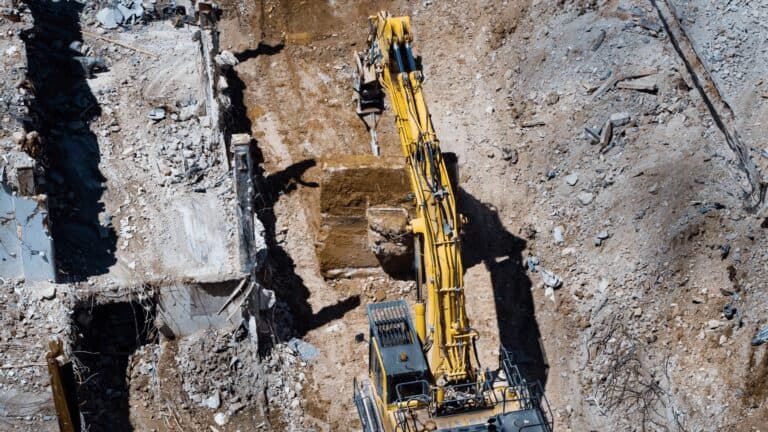
Mechanical demolition is commonly used when heavy equipment is needed to safely bring down unstable structures. This method allows for controlled removal of large sections.
Selective demolition is used when only certain parts of a structure are damaged. This allows for partial preservation and reduces unnecessary destruction.
In more delicate situations, manual deconstruction may be used to carefully dismantle sections of a building where precision is required to avoid damaging surrounding structures.
Each method is chosen based on safety conditions and the specific needs of the project.
Safety and Risk Management
Safety is the most important part of disaster demolition. Damaged structures are often unpredictable, so every step must be carefully controlled.
Before work begins, a full hazard assessment is conducted to identify risks such as weakened supports, fire damage, or unstable walls. This helps create a safe demolition plan.
During the process, strict safety protocols are followed, including controlled access zones, protective equipment, and continuous monitoring of the structure. These measures help ensure the safety of workers and the surrounding community.
Environmental Responsibility in Demolition
Modern disaster demolition also focuses on reducing environmental impact. Instead of simply discarding materials, crews often sort and recycle concrete, metal, and wood whenever possible.
Dust control systems and proper debris handling are used to minimize environmental disruption during the demolition process. This ensures cleaner and more responsible site management.
By recycling materials and reducing waste, disaster demolition also supports more sustainable rebuilding practices.
Choosing the Right Disaster Demolition Contractor in Baltimore
Selecting the right contractor is essential for handling disaster situations safely and efficiently. Experience, equipment, and emergency response capability all play a major role in the success of the project.
A qualified contractor will respond quickly, evaluate the site accurately, and develop a safe, controlled demolition plan tailored to the situation.
Working with experienced professionals like Legendary Demolition Baltimore ensures disaster demolition is handled safely, efficiently, and with full attention to detail from start to finish.